

Step-by-Step Parking Lot Paving Process
Revolutionize the way you perceive parking lots with an enlightening step-by-step journey that explains the parking lot paving process. Often overlooked, yet critical to daily life, these asphalt landscapes are more than spaces to park your car.
The work begins below the surface with careful subgrade preparation. For Capitol V Asphalt LLC, the right steps, in the right order, help create a durable lot that feels smooth, looks clean, and lasts longer.
Why Subgrade Prep Comes First
Ensure the foundation of any successful parking lot starts well below the asphalt surface. Proper subgrade preparation is the first step in the parking lot paving process, and it includes removing organic matter, debris, and soft spots.
By grading soil to a steady slope, Capitol V Asphalt LLC helps water move away instead of pooling under pavement. As a result, the lot is less likely to crack, sink, or develop bumps as traffic increases.
Clear weak soil and debris before any stone goes down.
Grade for drainage so water does not collect below the surface.
Replace soft spots with stronger fill for better support.
Base Course Basics
Selecting and placing the right base course material sets the stage for a strong parking area. This layer often uses crushed stone or gravel with fines, so weight spreads more evenly across the soil.
Capitol V Asphalt LLC installs the base in even lifts, often 4 to 6 inches, and then starts compaction. Therefore, the base stays firm, resists shifting, and helps protect the layers above from water damage.
Use consistent stone sizes for better lock and stability.
Place the base in uniform lifts to avoid weak sections.
Compact early so the base does not settle later.
Getting Asphalt Thickness Right
Balance matters when choosing asphalt thickness. Too thin, and cracks can form under heavier vehicles. Too thick, and you may pay more than needed for material.
Many commercial lots use 2 to 4 inches, depending on traffic and load needs. During the parking lot paving process, Capitol V Asphalt LLC watches temperature and spread rates so thickness stays even across the lot.
Compaction Makes the Surface Strong
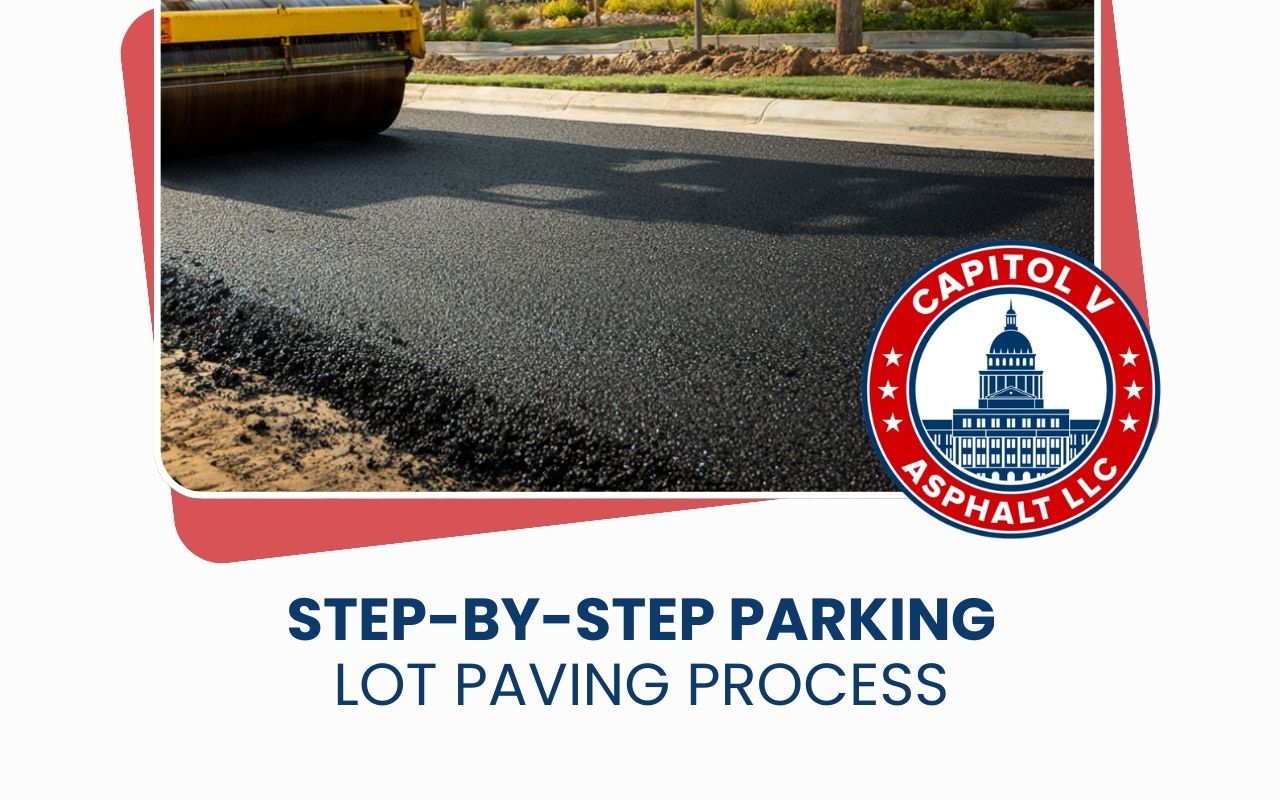
Achieving the right compaction turns loose hot mix into a dense, load-ready surface. After paving, rollers pass over the mat to tighten materials and remove air gaps.
Compaction improves strength and helps create a smoother finish. In addition, Capitol V Asphalt LLC uses several roller passes to reduce moisture entry and support longer pavement life.
Cure Time Matters More Than It Looks
Allow enough cure time before opening the lot to traffic. Even if the surface looks ready in hours, the asphalt continues to harden for days.
During cure time, keep cars and heavy equipment off the new pavement. Cooler weather and higher humidity can extend cure time, so Capitol V Asphalt LLC often plans work during conditions that support a steady set.
Milling and Overlay for Older Lots
When older pavement has cracks, potholes, or uneven areas, milling can refresh the surface without a full rebuild. This step removes the worn top layer and leaves a level base for new asphalt.
After milling, an overlay adds fresh asphalt, often 1 to 2 inches, and bonds it with a tack coat. If you are weighing options, explore help through asphalt paving and repair servicesfrom Capitol V Asphalt LLC.
Milling removes damaged asphalt and creates a smoother base.
Overlay adds a new surface without tearing out the full structure.
Milling & overlay can improve drainage and curb appeal quickly.
Planning Notes for Property Managers
Planning a paving project means managing budgets, timing, and site access. Property managers often start by checking for drainage issues or soft spots that can affect subgrade preparation.
Also, schedule matters for tenants and customers. Capitol V Asphalt LLC can help you plan around operations, cure time, and striping needs, so the property stays usable with less disruption.
Frequently Asked Questions
What is the first step in the parking lot paving process?
It starts with subgrade preparation, including clearing debris, fixing soft spots, and grading for drainage before base material is placed.
How thick should asphalt be for a commercial parking lot?
Many commercial lots use about 2 to 4 inches, although the right asphalt thickness depends on traffic loads and use patterns.
Why is compaction so important?
Compaction increases density and reduces air gaps, which helps prevent moisture damage, early cracking, and surface failure over time.
How long is cure time before cars can use the lot?
The surface may feel set in hours, yet full cure time can take days. Weather, humidity, and traffic loads can change the timeline.
When should I consider milling & overlay instead of full replacement?
Milling & overlay works well when the base is still solid but the surface is worn. It refreshes the lot faster than a full rebuild.
Maintenance Tips That Help Lots Last
Routine care protects your investment long after paving ends. Cleaning debris, sealing cracks, and applying sealcoat can reduce water entry and surface wear.
Just as important, keep drains clear so water does not pool and weaken the subgrade or base course. For maintenance planning tied to your property needs, contact Capitol V Asphalt LLC via the Capitol V Asphalt LLC contact page.
Paving a Path to Durable Parking Lots
By following each stage of the parking lot paving process, from subgrade preparation to cure time, you build a surface that handles daily wear. Steps like base course quality, asphalt thickness control, and solid compaction work together for better performance.
In addition, regular care and smart use of milling & overlay can extend pavement life. With Capitol V Asphalt LLC guiding the work, your lot can stay smooth, safe, and inviting for years.