

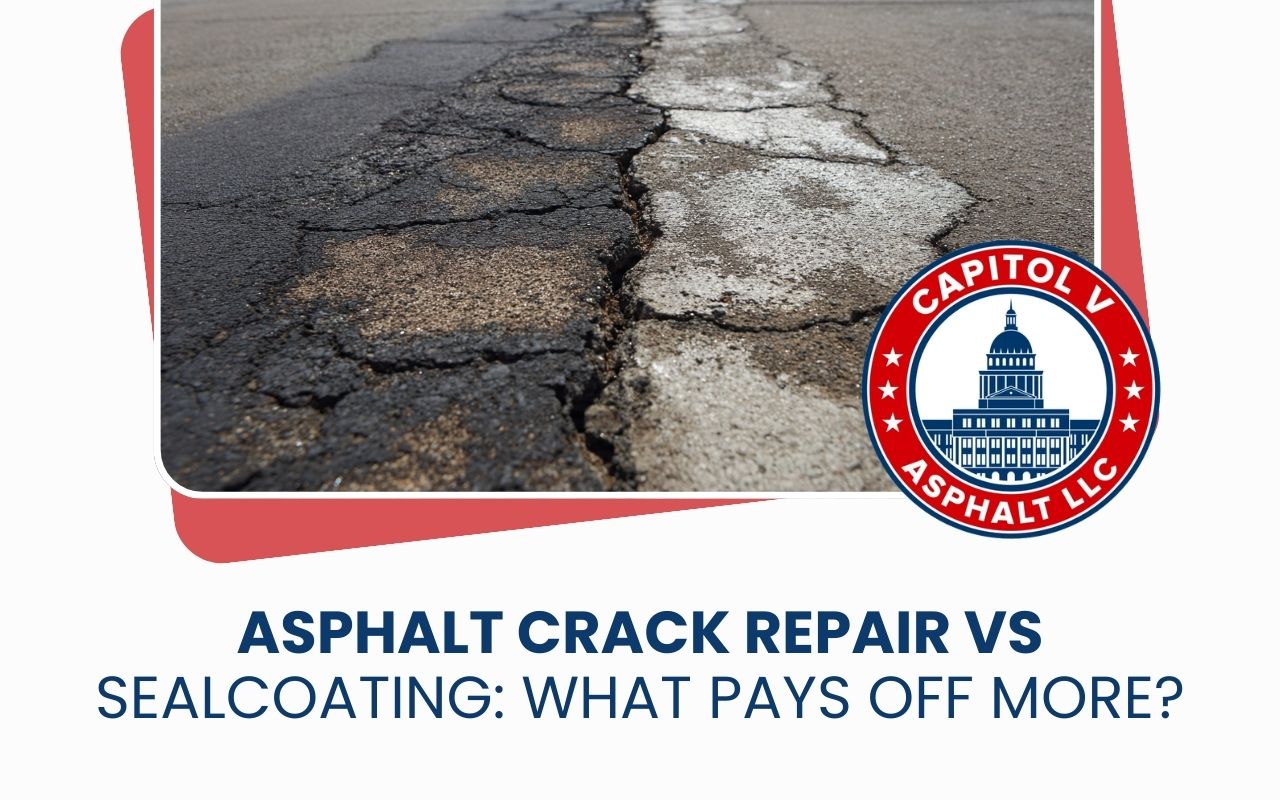
Asphalt Crack Repair vs Sealcoating: What Pays Off More?
When you compare asphalt crack repair vs sealcoating, you are really choosing how to protect your pavement investment. With Capitol V Asphalt LLC, the right plan can improve both lifespan and curb appeal, especially on driveways and parking lots.
This asphalt crack repair vs sealcoating decision matters because cracks invite water infiltration, while sealcoating helps prevent future wear. Also, small damage can grow into alligator cracking if it is ignored.
Why Asphalt Maintenance Matters for Long-Term Pavement Health
Well-kept asphalt looks better and lasts longer, which is why Capitol V Asphalt LLC encourages steady preventive maintenance. Roads, lots, and driveways take stress from vehicles, weather shifts, and time. Even so, early care can reduce bigger repairs later.
Stops water infiltration before it weakens the base.
Reduces the chance of potholes and surface breakup.
Helps avoid alligator cracking that can spread fast.
Improves safety and supports property value.
Because neglected cracks grow, a consistent plan often costs less than emergency fixes. As a result, your surface stays smoother and safer for daily use.
Understanding Asphalt Crack Repair and What It Solves
Cracks often form from freeze-thaw cycles, heavy loads, and aging materials. Once moisture gets inside, damage can expand and lead to alligator cracking. That is why asphalt crack repair vs sealcoating is not an either-or choice in many cases.
With Capitol V Asphalt LLC, asphalt crack repair focuses on sealing openings directly. Crack sealing vs sealcoating becomes clear here: crack work treats the problem area, while sealcoating protects the broader surface.
Benefits of Crack Repair and Asphalt Patching
Fixing cracks early limits water infiltration and helps protect the base. When the base stays stable, the surface holds up better under traffic. Therefore, asphalt patching and crack sealing can extend pavement life and delay major resurfacing.
Blocks water infiltration at the entry point.
Helps prevent alligator cracking from forming.
Supports load strength under daily traffic.
Creates a smoother surface for cars and pedestrians.
Also, early repairs usually cost less than larger section replacements. In addition, the surface looks cleaner and feels safer to use.
How Crack Repair Is Typically Done
Most crack work follows simple steps. First, clean out dirt, debris, and plant growth so materials bond well. Then apply a rubberized filler or asphalt patching compound and level it with the surrounding pavement.
Finally, allow cure time before traffic returns. While the steps are straightforward, proper prep is key. For that reason, Capitol V Asphalt LLC often recommends professional help when cracks are widespread or deep.
Sealcoating and Why It Supports Preventive Maintenance
Sealcoating adds a thin protective layer that helps guard asphalt from sun, oil, and moisture. In an asphalt crack repair vs sealcoating comparison, sealcoating is the shield that helps slow oxidation and surface drying.
Because it also seals small pores, it can reduce future water infiltration. Even so, it does not fix active damage. So, sealcoating works best after cracks are handled first.
Advantages of Sealcoating for Appearance and Protection
Sealcoating can restore that dark, uniform look while reducing wear from traffic. It also helps resist oil stains and UV exposure, which can make pavement brittle over time. As a result, you may delay larger repairs.
Improves curb appeal with a fresh, even finish.
Helps slow UV damage and oxidation.
Reduces moisture entry through small pores.
Supports a safer, smoother surface feel.
If you want to pair protection with a broader care plan, explore options on the Capitol V Asphalt LLC services pageto match your pavement needs to the right method.
Frequently Asked Questions
Is asphalt crack repair vs sealcoating an either-or decision?
Not always. Many surfaces need crack repair first, and then sealcoating to protect the full area afterward.
What is the biggest risk if I skip crack sealing?
Water infiltration can weaken the base. Over time, that can lead to potholes and alligator cracking.
Does sealcoating fix alligator cracking?
No. Sealcoating can slow future wear, but alligator cracking usually needs asphalt patching or deeper repairs.
How do I decide between crack sealing vs sealcoating for my lot?
Start with condition. If cracks are visible, handle them first. If the surface is sound, sealcoating may be the next step.
Who can help me choose the best approach?
Capitol V Asphalt LLC can review your surface and suggest a plan. Use the Capitol V Asphalt LLC contact pageto request guidance.
Asphalt Crack Repair vs Sealcoating: Which Is the Better Investment?
Choosing asphalt crack repair vs sealcoating depends on what your pavement needs right now. Crack repair addresses active openings that invite water infiltration, while sealcoating supports preventive maintenance by adding a protective layer.
For many properties, the best value comes from using both in sequence. First, repair cracks and weak spots. Then, apply sealcoating to help lock out damage and extend surface life with Capitol V Asphalt LLC.