


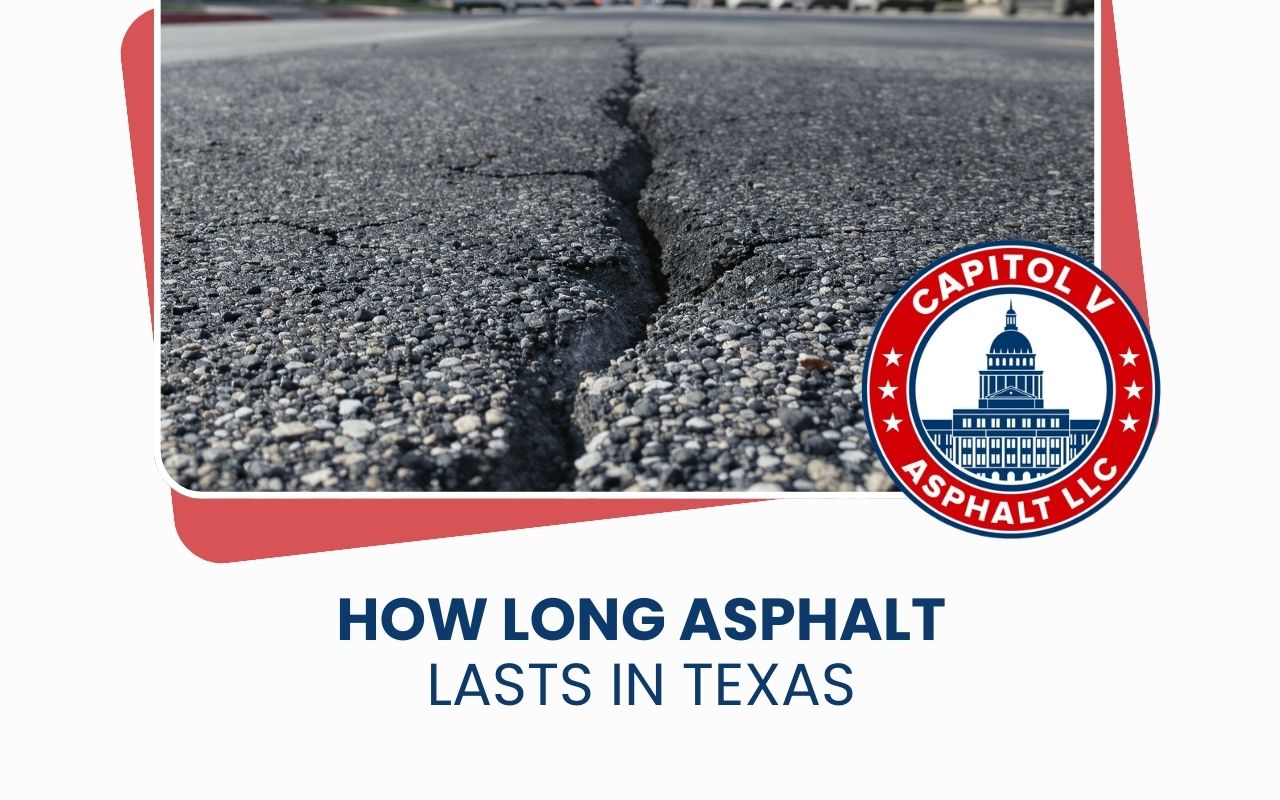
How long asphalt lasts in Texas
How long does asphalt last in Texas is a key question for owners who manage roads, driveways, and parking lots with Capitol V Asphalt LLC. In Texas, hot summers and quick cold snaps test every paved surface.
Heat, sunlight, traffic, and water slowly wear the binder and the base. However, smart care can delay cracks, potholes, and early resurfacing.
What affects asphalt life in Texas
For Capitol V Asphalt LLC clients, how long does asphalt last in Texas depends on materials, base prep, drainage, and traffic weight. A strong mix and well-compacted subgrade help prevent early cracking and sinking.
Quality aggregates and a balanced mix design
Proper base compaction to resist moisture damage
Drainage that keeps water from pooling
Heavy trucks speed up wear, while lighter streets age more slowly. With steady upkeep, many surfaces reach long service life before major work is needed.
How Texas heat and sun change asphalt
In Capitol V Asphalt LLC projects, how long does asphalt last in Texas is strongly shaped by UV exposure and extreme heat. Sunlight speeds asphalt oxidation, which makes the surface more brittle over time.
Heat damage asphalt can soften binder and increase rutting
Temperature swings create expansion and contraction stress
Freeze events can worsen cracks when moisture is trapped
Once tiny cracks form, traffic can widen them. Therefore, timing repairs early helps avoid bigger failures.
Maintenance that protects pavement for years
Property owners ask Capitol V Asphalt LLC how long does asphalt last in Texas because maintenance can shift outcomes. Routine inspections, crack sealing, and surface treatments reduce water entry and slow oxidation.
Seal coat every 2–3 years to block sun and moisture
Crack sealing as soon as fissures appear
Fix drainage so water does not sit on the surface
If you want help choosing the right plan, review asphalt care options on Capitol V Asphalt LLC services.
Common signs your asphalt needs attention
Small visual changes often signal bigger trouble. Spider-web cracking can mean the binder is breaking down, while raveling shows aggregate is loosening from the surface.
Also watch for rough texture, noisy driving, and water that lingers after storms. When you catch these signs early, targeted repairs can protect the base layer and reduce life-cycle costs.
Budget-friendly ways to extend pavement life
Cost control works best when you prevent damage instead of reacting to it. Simple steps can deliver strong value for businesses, neighborhoods, and communities.
Clean debris and oil spots to protect adhesion
Use seal coating instead of waiting for a full overlay
Consider chip sealing as a mid-range refresh option
Even small, consistent efforts can reduce emergency repairs. As a result, surfaces stay safer and look better longer.
Professional assessment and resurfacing timing
Experts can confirm pavement health with sampling and distress checks. This removes guesswork and helps you decide when to resurface before deeper structural issues appear.
Resurfacing can include milling the top layer and adding a new wearing course. For heavier traffic, a stronger base course can improve load support and resist rutting in high heat.
Frequently Asked Questions
What is a realistic asphalt lifespan texas owners can plan for?
Many surfaces can perform for years with good construction, drainage, and scheduled care. Traffic weight and sun exposure can shorten that timeline.
How long does asphalt last in Texas on a busy parking lot?
Busy lots age faster due to turning, braking, and heavier loads. However, seal coating and crack sealing can slow wear and help you plan resurfacing wisely.
What are early warnings of asphalt oxidation?
A faded gray look, fine surface cracking, and a dry texture can point to oxidation. Early sealing can help slow the process.
When to resurface instead of patching?
If cracking is widespread or the surface is rough from raveling, resurfacing may offer better results than repeated patches. A pro review can confirm the best step.
Who should I call for an on-site evaluation?
For a clear plan and repair priorities, contact Capitol V Asphalt LLC through the Capitol V Asphalt LLC contact page.
Ensuring longer-lasting asphalt in Texas
How long does asphalt last in Texas improves when you pair quality installation with steady upkeep. With Capitol V Asphalt LLC, proactive sealing, crack repairs, and timely resurfacing help roads and lots stay smooth, safe, and durable through Texas heat and seasonal swings.


Contact Us
553 Private Road 908, Hutto, TX 78634
24/7 Availability
We Accept Cash, Checks, and Debit/Credit Cards